

Finding the Best Magnetic Phone Cases for Your Smartphone
When you're hunting for the best magnetic phone cases, it's a juggling act. You need a magnetic pull that’s strong enough to be useful, but you also need serious protection and zero hiccups in your phone's performance. The best ones give you that satisfying "snap" for accessories like wallets and mounts, all while wrapping your phone—especially a delicate foldable—in military-grade armor.
Why a Magnetic Case Is More Than Just Protection
A great magnetic case does more than just protect your phone; it turns it into the central piece of a modular ecosystem. Stop thinking of it as just a protective shell. Instead, picture it as a docking station for a whole world of click-on accessories. This one upgrade lets you instantly snap on a wallet for a quick trip to the store, mount your phone in the car for GPS, or attach a battery pack without wrestling with cables.
But here’s the tricky part: finding one that does it all without cutting corners. It's a real concern, especially if you've got an expensive foldable phone. People constantly worry about a few key things:
- Magnet Strength: Is that connection really strong enough to keep a wallet attached when you shove it in your pocket, or a mount steady on a bumpy road?
- Protection Level: Is this case actually built to survive a real-world drop, or is it just a flimsy piece of plastic with a magnet glued in?
- Device Functionality: Will those magnets mess with my wireless charging, my S Pen, or—worst of all—the complex hinge on my foldable phone?
The Perfect Balance of Power and Safety
The best magnetic cases are built from the ground up to solve these problems. They don't just slap some magnets in a mold; they use carefully arranged magnetic arrays that create a vise-like grip on accessories while shielding your phone's sensitive guts from interference. It's that smart engineering that separates a premium case from a cheap knockoff. When you look at guides for the best iPhone 14 and iPhone 14 Pro cases, you’ll see this theme pop up again and again—balancing features with real protection is key.
A well-designed magnetic case isn't just about holding things; it's about creating a reliable and intuitive user experience. That satisfying "snap" of a perfectly aligned accessory is proof of quality engineering that genuinely improves how you use your phone every single day.
In this guide, we’ll get into the weeds of what makes a magnetic case stand out. We're talking magnet strength, material science, and must-have features like hinge coverage for foldables. Brands like FoldifyCase live and breathe this stuff, creating solutions so that owners of high-end phones never have to pick between convenience and peace of mind.
How Magnetic Phone Cases Actually Work
At first glance, sticking powerful magnets right next to your expensive phone seems like a terrible idea. But the best magnetic cases work on a principle of precise, controlled attraction—think less like a junkyard magnet and more like a perfectly engineered handshake. It’s this smart design that transforms a simple case into a hub for an entire ecosystem of accessories.
The magic comes from a special kind of magnet. We're not talking about the flimsy magnets holding pictures to your fridge. These cases use powerful Neodymium magnets, a type of rare-earth magnet that packs an incredible magnetic punch into a tiny space. They’re typically arranged in a specific circular pattern to create a focused, contained magnetic field.
This arrangement is the key. The magnetic field is carefully directed to be strongest on the outside of the case where accessories snap on, while staying neutral and weak on the inside where your phone sits. This ensures your phone's sensitive guts—the battery, GPS, and processor—are completely shielded from interference.
The Science of a Secure Snap
How well a magnetic case works all comes down to the layout of those magnets. For instance, cases built for Apple’s MagSafe standard use a very specific ring of magnets plus an extra alignment magnet. This isn't just for looks; it guarantees that accessories like wireless chargers or wallets snap into the perfect spot every single time. This ensures a secure hold and the most efficient charging connection.
This precision is what makes the whole system so reliable. A well-designed case creates a magnetic force strong enough to hold an accessory firmly in place, even during a bumpy car ride, yet it’s calibrated to let go with a simple twist. It’s the ideal balance of strength and convenience. To get a deeper dive into the principles, you can learn more about MagSafe charging technology, which has become the foundation for many modern magnetic cases.
The incredible growth of this tech speaks for itself. The global magnetic phone case market was valued at around USD 25.7 billion in 2023 and is expected to rocket to nearly USD 44.5 billion by 2033. This boom shows just how much people love the convenience and modularity these cases bring to the table.
Are The Magnets Safe For Your Phone?
It’s a fair question: can these strong magnets actually damage your phone? Decades ago, this was a real concern. A powerful magnet could easily scramble old-school electronics like CRT monitors or spinning hard drives. Thankfully, modern smartphones are built completely differently and are incredibly resilient to the static magnetic fields used in cases.
Key components that used to be vulnerable are no longer an issue in today's phones:
- Solid-State Drives (SSDs): Your phone uses flash memory, not old spinning disks. Magnets don't affect it.
- GPS and Compass: While a strong magnet can temporarily throw off the digital compass, it recalibrates the second you move it away. There’s zero permanent damage.
- Battery and Processor: These core parts just aren't susceptible to the magnetic fields from a phone case.
Modern magnetic cases are intelligently engineered. They use specific magnet arrays and materials to channel the magnetic field outward, away from your phone's internals. This design keeps your device completely safe while creating a powerful, reliable connection for your accessories.
This smart engineering is what lets a magnetic case be more than just protection. It becomes a seamless extension of your phone, unlocking a world of modular add-ons—from wallets and kickstands to car mounts and power banks—that make your daily life easier without ever putting your phone's performance or safety at risk.
Essential Features to Evaluate in a Magnetic Case
Stepping into the world of magnetic phone cases can feel a bit overwhelming. With so many options out there, all claiming to be the best, how do you sort through the noise? To make the right call, you have to look past the marketing and understand what really makes a case work. It’s like buying a car—you wouldn’t just focus on the paint job; you’d want to know what’s under the hood.
The same logic applies here. You need to dig into the magnet strength, the materials used, the real-world protection it offers, and the smart design choices that make it easy to use every day. Each of these pieces plays a huge role in how the case performs, whether you're just heading to work or taking it onto a construction site. Let’s break down what truly matters.
This graphic lays out the core pillars of a quality magnetic case. It's not just about one feature, but how strong magnets, protective materials, and smart design work together as a complete system.
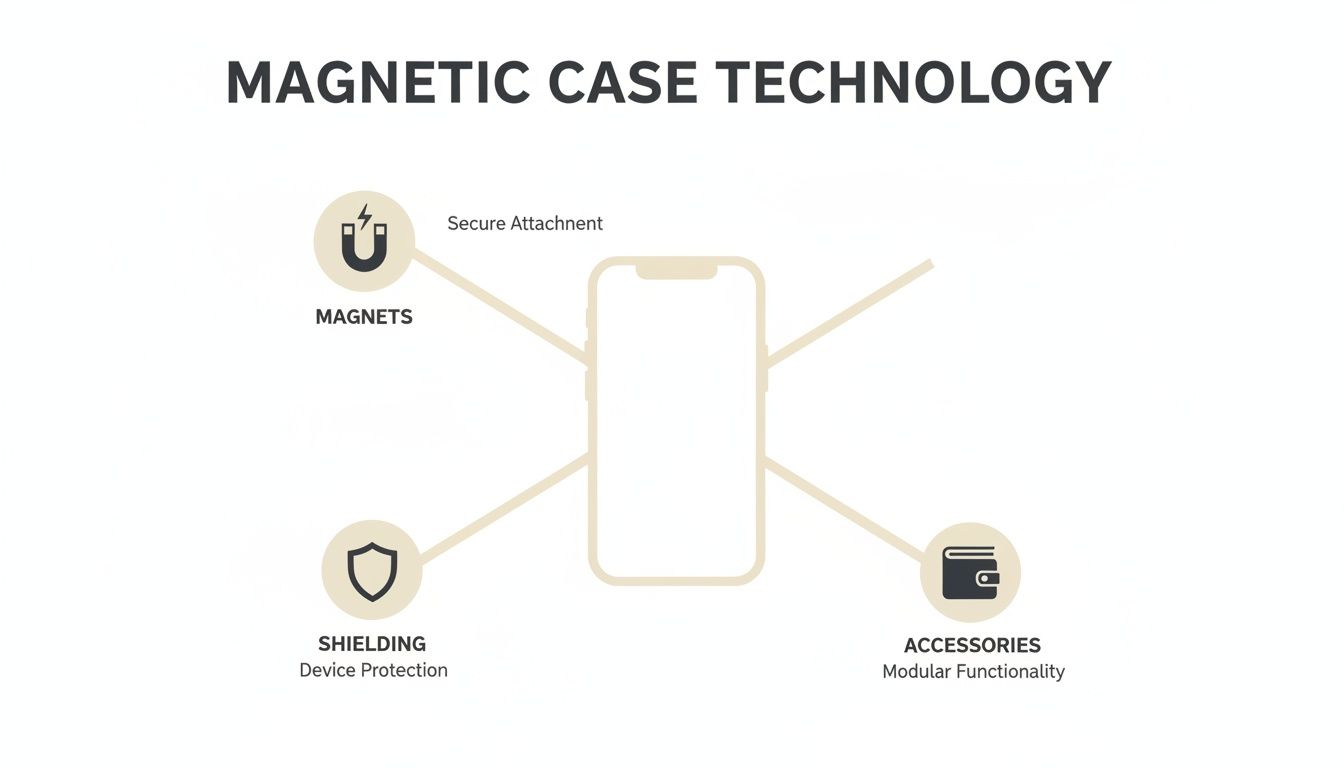
As you can see, a top-tier magnetic case is a balanced ecosystem. Strong magnets are just the start; they need to be integrated into a protective shell that’s both durable and functional to create a truly seamless experience.
Gauging True Magnet Strength
Not all magnets are created equal, and their strength is probably the single most important thing to get right. A weak magnetic connection is a recipe for disaster. Your wallet could slip off in your pocket, or worse, your phone could fly off its car mount the second you hit a pothole.
So, how can you tell the good from the bad? Look for cases built with high-grade Neodymium magnets. These are powerful rare-earth magnets that deliver a serious grip in a compact size. A well-made case will give you a satisfying, confident "snap" when you attach an accessory. You should feel a vise-like hold that requires a firm, deliberate twist to remove.
Try a quick at-home test: snap a magnetic wallet onto the case and give it a good, hard shake. If it’s a quality case, that wallet won’t budge. This simple tactile feedback is often the best indicator of a strong and reliable magnetic array.
This strength is absolutely essential for heavier accessories like battery packs or car mounts, where bumps and vibrations are a constant threat to a weak connection.
Decoding Case Materials
The materials of a case determine its feel, durability, and how well it protects your phone. While looks are important, the right materials form the backbone of both drop protection and long-term reliability. The three most common materials each bring something different to the table.
- Polycarbonate (PC): This is a tough, rigid plastic that’s excellent at resisting scratches and direct impacts. Its stiff structure keeps the case from warping over time, ensuring it always fits your phone snugly.
- Thermoplastic Polyurethane (TPU): As a flexible, rubber-like material, TPU is a master of shock absorption. It’s often used for the bumpers and corners of a case, acting like a tiny airbag to cushion your phone during a fall.
- Aluminum: Typically found in premium or rugged cases, aluminum offers incredible rigidity and a high-end feel. It provides superior protection against bending and harsh impacts, making it perfect for tougher environments.
Many of the best cases use a hybrid design, combining a rigid PC backplate with flexible TPU bumpers. This approach delivers the best of both worlds—scratch resistance on the back and shock absorption where you need it most. To get a better sense of how these materials compare, our guide on plastic vs. metal phone cases offers a much deeper dive.
To help you decide what's right for you, here’s a quick breakdown of how these features line up with different needs.
Magnetic Case Feature Comparison
| Feature | What It Means for You | Ideal for... |
|---|---|---|
| Magnet Strength | A secure "snap" for accessories. Prevents items from falling off. | Car mount users, anyone using a magnetic wallet or battery pack. |
| PC/TPU Hybrid | A balanced blend of scratch resistance and shock absorption. | Everyday users who want solid protection without extreme bulk. |
| MIL-STD-810G | Certified to survive multiple drops from at least four feet. | Anyone prone to accidental drops or working in active environments. |
| Hinge Coverage | Protects the most vulnerable part of a foldable phone. | All owners of foldable devices like the Galaxy Z Fold or Pixel Fold. |
| Sealed Ports | Keeps dust, dirt, and debris out of your phone's charging port. | Construction workers, warehouse staff, and outdoor enthusiasts. |
This table isn't about finding a single "best" case, but rather the best case for your life. A city commuter has very different needs than a field technician, and understanding these features helps you make a choice that fits perfectly.
Understanding Military-Grade Protection
You’ve probably seen the term "military-grade protection" or MIL-STD-810G thrown around. This isn't just a slick marketing phrase; it’s a real standard developed by the U.S. military to test how equipment holds up in harsh conditions. For a phone case, this certification almost always refers to its ability to survive drops.
To earn this rating, a case (with a phone inside) has to withstand a series of drops from a specific height—usually four feet—onto a hard surface without the phone sustaining any damage. The test is brutal, involving drops on its face, back, sides, and corners to guarantee all-around protection.
When you see a MIL-STD-810G certified case, you can be confident it’s been engineered to handle the everyday fumbles and accidental drops that can easily lead to a shattered screen. It’s a solid benchmark for real-world impact resistance.
Crucial Design and Ergonomic Features
Beyond the raw materials and magnets, it’s the small, thoughtful design details that separate a good case from a great one. These features often make the biggest difference in day-to-day use and are frequently tailored to specific types of phones.
For anyone with a foldable phone, hinge coverage is an absolute must. The hinge is the most complex and fragile part of a foldable, and a quality case has to shield it from harm without getting in the way of that smooth opening and closing motion.
Another critical feature is sealed ports. If you work in a dusty place like a construction site or a warehouse, you need a case with covers for the charging port and speakers. These seals are essential for stopping dirt and debris from getting inside and wrecking your phone’s sensitive components. Finally, look for raised edges around the screen and camera lenses—they create a vital buffer, preventing scratches when you lay your phone down on a flat surface.
Magnetic Cases and Modern Phone Technology
The moment you bring powerful magnets near a high-tech device, a few questions pop into your head. It’s a totally valid concern, especially when you’re dealing with a complex and expensive phone. A poorly designed case can absolutely interfere with core functions, turning a cool accessory into a major headache.
But the best magnetic phone cases aren't just dumb plastic with magnets glued on. They're engineered to integrate with modern technology, not fight against it. Let's tackle the three biggest questions people have about how these cases work with today's advanced smartphones.
Will Magnets Affect Wireless Charging?
Wireless charging depends on a clean connection between the charging coil in your phone and the one in the charging pad. Anything that gets in the way can slow things down or stop the power transfer completely. So, does a magnetic case get in the way?
Not if it’s a good one. Premium manufacturers use two key tricks to make sure charging works perfectly every time.
- Smart Magnet Placement: The magnets are arranged in a specific pattern, usually a ring, that goes around your phone's wireless charging coil, not right on top of it. This clever design lets the electromagnetic field pass through without any obstruction.
- Ferrite Sheets: Some high-end cases even include a thin layer of ferrite. This material helps guide the magnetic field away from the charging area, which stops any potential interference in its tracks.
This careful engineering means you get the best of both worlds—a rock-solid magnetic hold for your accessories and fast, efficient wireless charging. If you want to dive deeper, our article on why to consider a MagSafe-compatible case really breaks down how this tech works.
A quality magnetic case complements wireless charging rather than competing with it. The magnetic array is designed to perfectly align your phone on a compatible charger, guaranteeing the most efficient connection and eliminating the frustration of finding that tiny "sweet spot."
The Crucial Question For Foldable Hinges
For anyone with a Samsung Galaxy Z Fold or Google Pixel Fold, the hinge is everything. It's a tiny masterpiece of engineering, so the idea of sticking strong magnets near it is understandably a bit scary. Can a magnetic case actually damage that intricate mechanism?
The short answer is no, but with a big catch: the case must be specifically designed for your foldable model by a brand that knows what it's doing.
Specialist brands like FoldifyCase pour a ton of resources into R&D to make cases that respect the unique mechanics of foldable phones. The magnets are positioned far away from the delicate gears and components inside the hinge itself. This ensures the magnetic field has zero impact on the smooth opening and closing of your device.
A cheap, generic magnetic case, on the other hand, likely wasn’t designed with this in mind and could pose a real risk. This is exactly why choosing a brand that lives and breathes foldable devices is non-negotiable for protecting your investment. The case has to work with the hinge, not against it.
What About S Pen and Stylus Functionality?
Here’s another spot where thoughtful design is absolutely critical. The S Pen and other active styluses use a technology called electromagnetic resonance (EMR) to talk to a digitizer layer under your phone’s screen. A random magnetic field can disrupt this chat, creating "dead spots" where your stylus just won't work.
This problem is most common when a single, strong magnet is placed right on the back of the phone where you’re trying to write. The best magnetic cases get around this in a couple of ways:
- Optimized Magnet Placement: The magnets are kept near the edges of the case, staying clear of the central part of the screen where most people write and draw.
- Contained Magnetic Fields: By using specific magnet arrays and shielding materials, the magnetic field is directed outward, minimizing any interference with the digitizer layer inside.
While a very strong magnet right on the screen can still cause temporary issues, cases with properly arranged magnetic rings are far less likely to cause problems. If you’re a heavy stylus user, look for cases that specifically mention S Pen compatibility and have been tested to ensure you get a smooth, uninterrupted writing experience. The whole point is to give you a strong connection for accessories without compromising one of your phone’s best features.
Choosing the Right Magnetic Case for Your Lifestyle
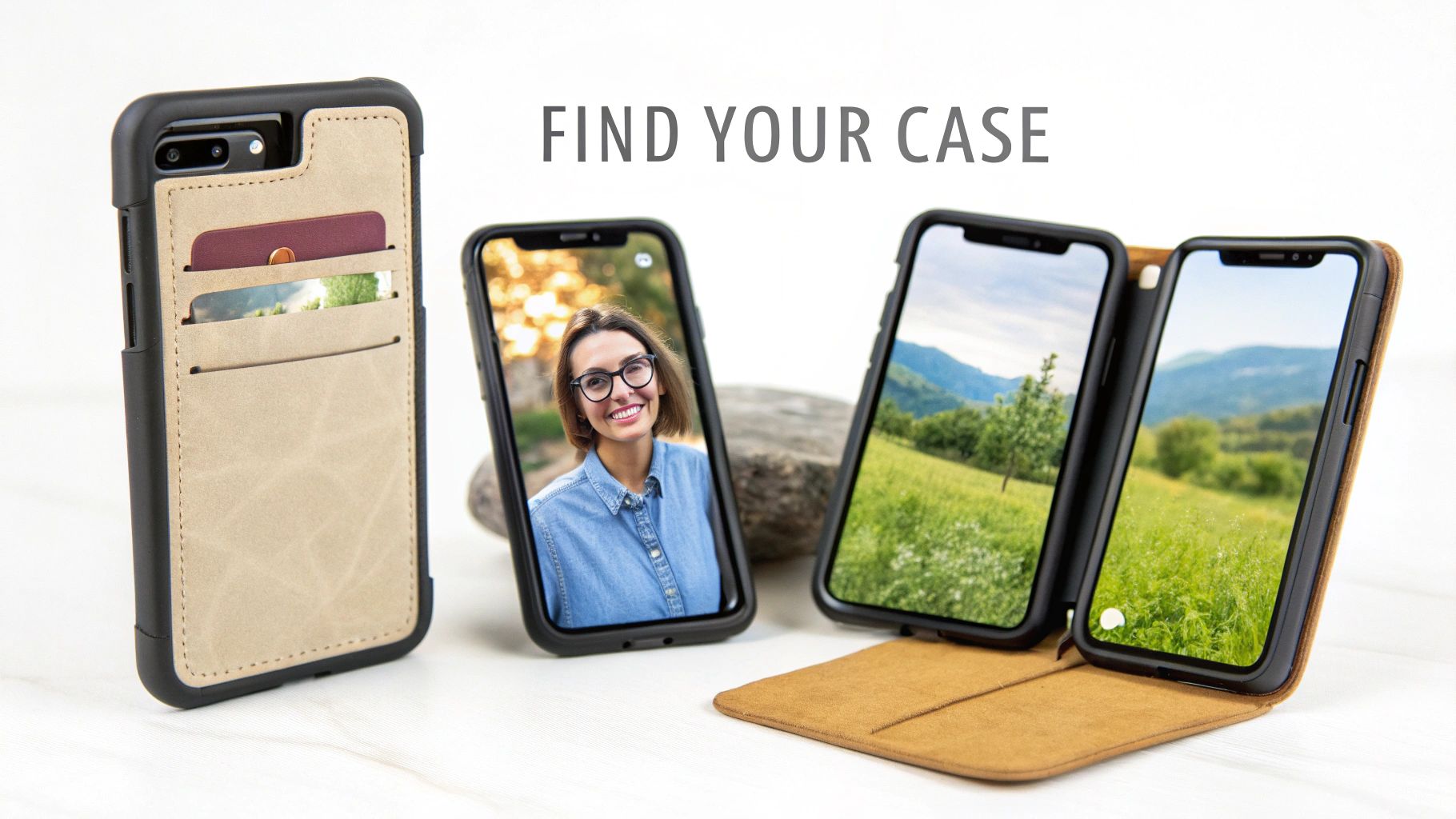
Knowing the technical specs of a magnetic case is one thing, but figuring out how those features fit into your actual daily life is what really matters. The best magnetic phone cases are never a one-size-fits-all solution; they’re extensions of your routine. So, let’s stop listing features and start talking about how different lifestyles demand totally different kinds of protection and functionality.
When you match a case to what you actually do every day, you turn it from a simple accessory into an essential tool that makes life easier, not harder. Whether you're a professional hustling through the city, an outdoor adventurer, or a power user who lives on their foldable phone, there’s a magnetic case built just for you.
For the Busy Professional
Picture this: you’re constantly bouncing between your office, your car, and client meetings. Your phone is your command center, and every second counts. For this kind of fast-paced life, you need a case that’s sleek, looks the part, and works seamlessly with your other gear. A big, bulky case would be total overkill.
Your priorities should be:
- Strong Magnetic Hold: This is critical for a rock-solid connection to a car mount. You need your phone to snap on for navigation and stay put, even when you hit an unexpected pothole.
- Slim Profile: The case needs to slide into a pocket or briefcase without creating a bulge. No one wants to fight with their pocket just to answer a call.
- Accessory Integration: Look for a case that plays nicely with magnetic wallets or cardholders. This lets you trim down your everyday carry, grabbing just your phone and keys for that quick lunch meeting.
A minimalist design, maybe a hybrid of polycarbonate and TPU, hits that sweet spot between style and everyday protection. It gives you just enough defense against minor drops and bumps without ruining the professional look you’re going for.
For the Adventurous Explorer
Now, imagine you're out on a hiking trail, working on a construction site, or just enjoying a weekend camping trip. Your environment is unpredictable. Here, that slim, stylish case just won't cut it. Your phone needs a suit of armor that can handle dust, drops, and general roughhousing.
For this rugged lifestyle, your focus shifts completely:
- MIL-STD-810G Drop Protection: This is non-negotiable. You absolutely need a case that is certified to survive drops onto hard, unforgiving surfaces.
- Sealed Ports: In the great outdoors or on a job site, dust, dirt, and moisture are everywhere. Cases with built-in covers for the charging port and speakers are a must.
- Reinforced Corners: Most phones land on a corner when they fall, so having extra shock absorption right there is crucial to preventing a shattered screen.
A heavy-duty case, maybe one with an aluminum frame and deep, textured grips, is your best friend here. Sure, it adds some bulk, but the peace of mind you get when your phone is exposed to the elements is worth it.
For the Foldable Phone Power User
If you own a device like the Samsung Galaxy Z Fold or Google Pixel Fold, you’ve got a unique set of problems. You've invested in some serious tech, and your case has to protect its most innovative—and fragile—part: the hinge. A standard case just wasn't built for the job.
A foldable phone user needs a case that acts as both a protective shell and a specialized guardian for the hinge mechanism. It must provide robust, 360-degree coverage without interfering with the device's core functionality.
Your checklist has to include:
- Dedicated Hinge Protection: The case must have a specific component that covers the hinge when the phone is closed, shielding it from impacts and debris.
- Precision Fit: It absolutely cannot get in the way of the folding motion or block any of the phone's ports, buttons, or cameras.
- Strong Magnetism without Interference: The magnets need to be powerful enough for accessories but placed strategically so they don’t mess with the hinge or S Pen.
This is where specialized solutions really shine. Exploring a curated magnetic case collection designed specifically for foldables is the only way to find a case that meets these exact needs. This kind of focus on niche devices is a huge part of the mobile accessory market, which is expected to grow from USD 27.3 billion in 2025 to USD 47.1 billion by 2035. This growth just shows the rising demand for personalized, device-specific protection. You can read more about this market trend at Future Market Insights.
Your Magnetic Phone Case Buying Checklist
Alright, let's cut through the noise. Shopping for a magnetic case can feel a little overwhelming with all the options out there, but it really just comes down to matching the right features to how you actually use your phone.
I've put together a simple checklist to walk you through the five most important things to check before you buy. Think of it as your final sanity check to make sure you're getting a case that won't let you down.
-
Does it actually fit? First things first, double-check that the case is built for your exact phone model and year. This is especially critical for foldable phones where a millimeter of difference can throw everything off.
-
How tough does it need to be? Be honest with yourself. Are you prone to dropping your phone, or do you work somewhere unforgiving like a construction site? If so, don't settle for anything less than a MIL-STD-810G rating. That certification means it has survived some serious drop testing.
-
Will it stick? Not all magnets are created equal. You want to see "Neodymium magnets" listed in the specs. This ensures you get that satisfying, secure "snap" when you connect an accessory, and it won't slide off your car mount on a bumpy road.
-
Can you still charge wirelessly? Look for cases that explicitly say they're compatible with wireless charging. A good magnetic case is designed to work with chargers, not block them.
-
Is the hinge covered? For anyone with a foldable phone, this is a deal-breaker. The hinge is the most complex and fragile part of your device, and your case absolutely must offer solid, reliable protection for it.
Making the right call is important, especially in a market that's expected to hit USD 40.24 billion by 2033. If you're curious, you can explore more about phone case market trends to see where all this innovation is headed.
Frequently Asked Questions
Even after getting the hang of the tech, you probably have a few questions rolling around in your head before picking a magnetic case. It's smart to be sure, especially when your phone is on the line. We’ve pulled together the most common questions we hear to give you clear, straight answers.
Will a Magnetic Case Drain My Phone Battery?
This is a classic myth, but the answer is a simple no. The magnets in a quality phone case create a static field—they aren't drawing any power from your phone to work. They’re completely passive.
Your phone's battery life is all about screen brightness, what apps you're running, and how hard it's working to find a signal. The case is just along for the ride. A well-engineered magnetic case is energy-neutral, so you get all the convenience without any hit to your battery.
Can Magnets in a Phone Case Damage My Credit Cards?
Back in the day, this was a real concern. But today? Not so much. Almost every credit and debit card now uses a secure EMV chip for transactions and NFC for tap-to-pay. Neither of these is affected by the kind of magnets used in a phone case.
While a super-powerful, industrial magnet held right against an old-school magnetic stripe could mess it up, modern magnetic cases and wallets are designed to be perfectly safe. The magnet strength and placement are specifically engineered to work with today’s chip-enabled cards, keeping your financial info secure.
Are Magnetic Cases Safe for Foldable Phones?
Absolutely, as long as you stick with a brand that actually specializes in foldables. It’s right to be worried about magnets interfering with the complex hinge on a Galaxy Z Fold. That's why premium case makers put so much engineering into getting it right.
Brands like FoldifyCase design their cases so the magnets are placed far away from any sensitive hinge components. This strategic layout gives you a rock-solid connection for your accessories without ever messing with the smooth operation of your phone's most important part. The key is to avoid those generic, one-size-fits-all cases that don't account for this.
How Strong Should the Magnets Be?
It’s less about a specific number and more about how it feels. The right magnet strength gives you a confident "snap" when you attach a wallet or mount, so you know it’s not going anywhere with the bumps and jostles of daily life.
A good test is to attach an accessory and give it a solid shake. It should stay put. The best cases use high-grade Neodymium magnets arranged in a way that gives you a powerful grip but still lets you pull accessories off when you want to. It’s all about finding that perfect balance between security and convenience.
Ready to find the perfect blend of protection and magnetic convenience for your foldable? Take a look at the specialized collections at FoldifyCase and find a case engineered to match your phone and how you use it. Find your ideal case at https://www.foldifycase.com.
Article created using Outrank