

Best rugged phone cases: Top picks for Galaxy Z Fold, Flip, and Pixel Fold
If you’re hunting for the best rugged phone cases for a foldable device like the Galaxy Z Fold, Galaxy Z Flip, or Google Pixel Fold, you’ve probably noticed that your options are a bit different. Standard cases just don't cut it. They almost never account for the delicate hinge and flexible screen, which means you absolutely need a case with dedicated hinge coverage and serious shock-absorbent materials to protect these incredible (and expensive) devices.
Why Your Foldable Phone Needs More Than a Standard Case
That beautiful foldable screen and complex hinge are what make your device a marvel of modern engineering. But they're also its biggest weak spots, and a typical phone case is completely unprepared to defend them. A standard case is designed to protect a single, solid slab of glass and metal. It’s simply not built for a phone that literally bends in half.
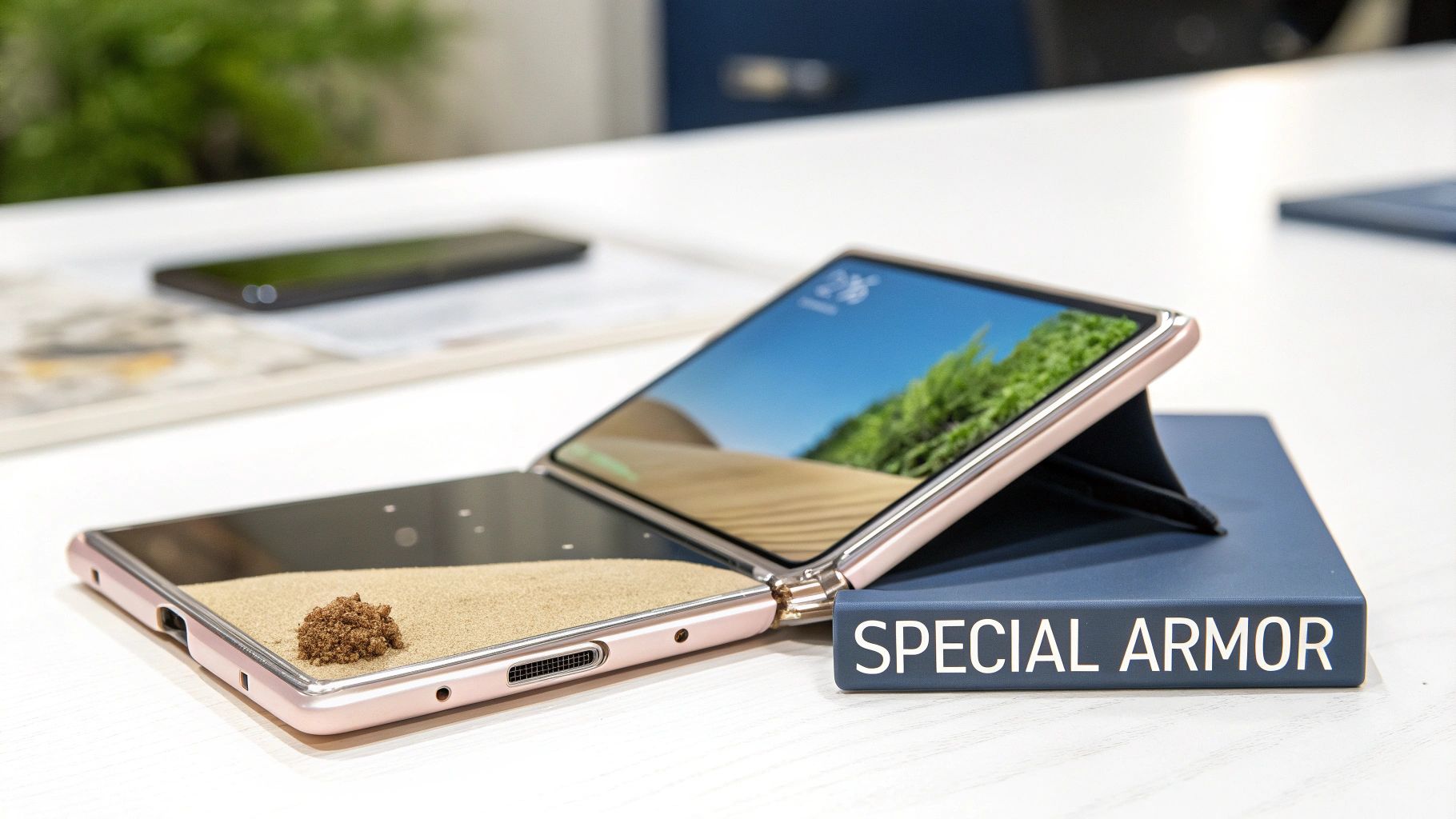
Here's an analogy: you wouldn't wear a bicycle helmet to a car race. The forces and risks involved are worlds apart. In the same way, your high-tech foldable requires specialized armor built for its unique design. That’s where rugged cases made specifically for foldables come into play.
Understanding Foldable Vulnerabilities
Unlike a traditional smartphone, a foldable device is vulnerable from multiple angles. A standard case might handle a direct drop onto its back, but it does nothing to prevent the most common and costly problems that only affect these devices. These unique risks demand a smarter approach to protection.
Here’s what you really need to worry about with your foldable:
- The Hinge Mechanism: Think of the hinge as the mechanical heart of your phone. It’s incredibly vulnerable to impacts, but the real silent killer is debris. A single grain of sand or dust that works its way into the mechanism can cause grinding, stiffness, and eventually, total failure.
- The Inner Display: That flexible screen is made of ultra-thin glass, which is far more fragile than the tough glass on a standard phone. Any direct impact, or even just pressure from a piece of debris trapped inside when you close it, can leave you with a permanently damaged screen.
- Torsional Forces: When a foldable phone is dropped, it can twist and bend in ways a rigid phone can't. This twisting force can knock the hinge out of alignment or damage the delicate ribbon cables running through it.
The Cost of Inadequate Protection
Skipping out on specialized protection for your foldable is a huge gamble. The intricate engineering of these phones means repairs are incredibly complex and eye-wateringly expensive, a fact backed up by the high cost of Samsung Galaxy Fold screen replacements.
A quality rugged case isn't just an accessory; it's an insurance policy on your investment. It’s precision-engineered armor designed to absorb impacts, seal out debris, and shield that all-important hinge. We go into more detail about why your foldable phone needs foldable protection in our dedicated guide, but this article will walk you through exactly how to choose the right defense for your device.
Decoding Rugged Specs That Actually Matter for Foldables
When you're shopping for a case to protect your foldable, you get hit with a blizzard of technical jargon like "MIL-STD-810G" and "IP68." It’s easy to dismiss these as marketing fluff, but they’re not. They are real, measurable standards that separate genuine protection from empty promises.
Think of these specs as a case's resume. You wouldn't hire someone without checking their qualifications, right? The same logic applies here. Examining these specs tells you if a case is truly up for the demanding job of protecting a Galaxy Z Fold or Pixel Fold.
Military-Grade Durability Explained
The most important spec you’ll run into is a MIL-STD-810G or MIL-STD-810H rating. This isn’t a simple pass/fail grade. It's a brutal series of trials designed by the U.S. Department of Defense to see how equipment holds up under extreme field conditions. To really get a feel for what a case endures, it's worth understanding the military-grade ruggedness standards like Mil-Std-810.
Picture a boot camp for your phone case. It gets dropped repeatedly from different heights onto unforgiving surfaces. It’s blasted with extreme temperatures, shaken violently, and put through hell. A case that earns this badge has proven it can survive much more than a simple slip from your hand. For a foldable, this is non-negotiable—the force from a single bad drop can easily knock the delicate hinge out of alignment for good.
The Power of Material Synergy
You can't achieve real protection with just one material. The best rugged cases use a multi-layer design where different materials work together, kind of like the safety systems in a modern car.
- Thermoplastic Polyurethane (TPU): This is your shock-absorbing inner layer. It’s a flexible, rubbery material that acts as a crumple zone, compressing on impact to soak up and disperse the initial force. It’s the cushion for your device.
- Polycarbonate (PC): This is the tough outer shell. It provides the rigid structure, like a car's frame, preventing the case from twisting and defending against direct punctures and deep gouges.
When combined, these materials work in concert to channel destructive energy away from your phone’s most fragile points—especially the hinge and screen edges.
A well-designed rugged case isn’t just about being thick; it’s about smart engineering. The goal is to manage impact forces effectively, ensuring the destructive energy never reaches the delicate internals of your foldable phone.
This combination is why so many users in tough environments rely on certified protection. The phone case market is projected to grow from USD 26.3 billion in 2024 to USD 54.2 billion by 2034, largely driven by the demand for truly durable designs. For a professional using a Galaxy Z Fold on a job site, protecting against hinge failure—which accounts for a staggering 35% of foldable issues—is absolutely critical and can slash annual repair costs.
Understanding IP Ratings for Dust and Water
Drops aren't the only enemy. Dust, dirt, and water can spell disaster for a foldable's intricate hinge mechanism. That's where Ingress Protection (IP) ratings come into play. An IP rating is a simple two-digit number that tells you exactly how well a case seals out solids (like dust) and liquids.
Let’s break down a common rating you'll see: IP68.
- The first digit (6) is for solids. A ‘6’ is the highest possible rating, meaning the case is completely sealed against dust, sand, and other fine particles. This is essential for preventing grit from getting into the hinge and grinding it down.
- The second digit (8) is for liquids. An ‘8’ means the case can be fully submerged in water, usually up to 1.5 meters for 30 minutes, without a single drop getting inside.
For anyone working outdoors, on a construction site, or even just near the water, a high IP rating ensures your expensive foldable is completely sealed off from the elements. This is a level of defense that standard cases just can't offer. Learning more about why rugged users choose shockproof cases really drives home how vital these features are. By decoding these specs, you can confidently pick a case that offers protection you can actually prove.
The Critical Role of Hinge Protection for Foldables
While military-grade drop ratings and premium materials are a great starting point, they only cover the threats common to all phones. For a foldable device like a Galaxy Z Fold or Google Pixel Fold, the single most important feature of a rugged case is something standard phones never even think about: hinge protection.
The hinge is the mechanical heart of your device—an intricate system of gears and components that is also its greatest weakness.
Choosing one of the best rugged phone cases without solid hinge coverage is like buying a suit of armor but leaving the chest piece at home. You're exposing the most critical component to direct hits that can lead to catastrophic failure, turning your incredible foldable into a very expensive paperweight.
Why the Hinge Is a Magnet for Damage
That spine isn't just a simple joint; it's a complex mechanism built to withstand thousands of folds. But its exposed nature makes it a prime target for two types of damage that standard cases are completely unequipped to handle.
First, there's direct impact. A sideways drop that lands squarely on the spine can easily misalign the delicate gears inside. This can stop the phone from opening smoothly or even prevent it from laying flat. A well-designed hinge cover absorbs and redirects that force, protecting the precise alignment of the internal parts.
Second, and maybe even more dangerous, is debris intrusion. Tiny particles of dust, sand, or pocket lint can work their way into the hinge over time. Once inside, they act like sandpaper, grinding against the moving parts with every single fold. This leads to a gritty, stiff action and can eventually cause the entire hinge to seize up. A case with a fully sealed hinge protector is the only way to stop this silent killer.
This is why a truly rugged case for a foldable relies on a complete system of protections working together.
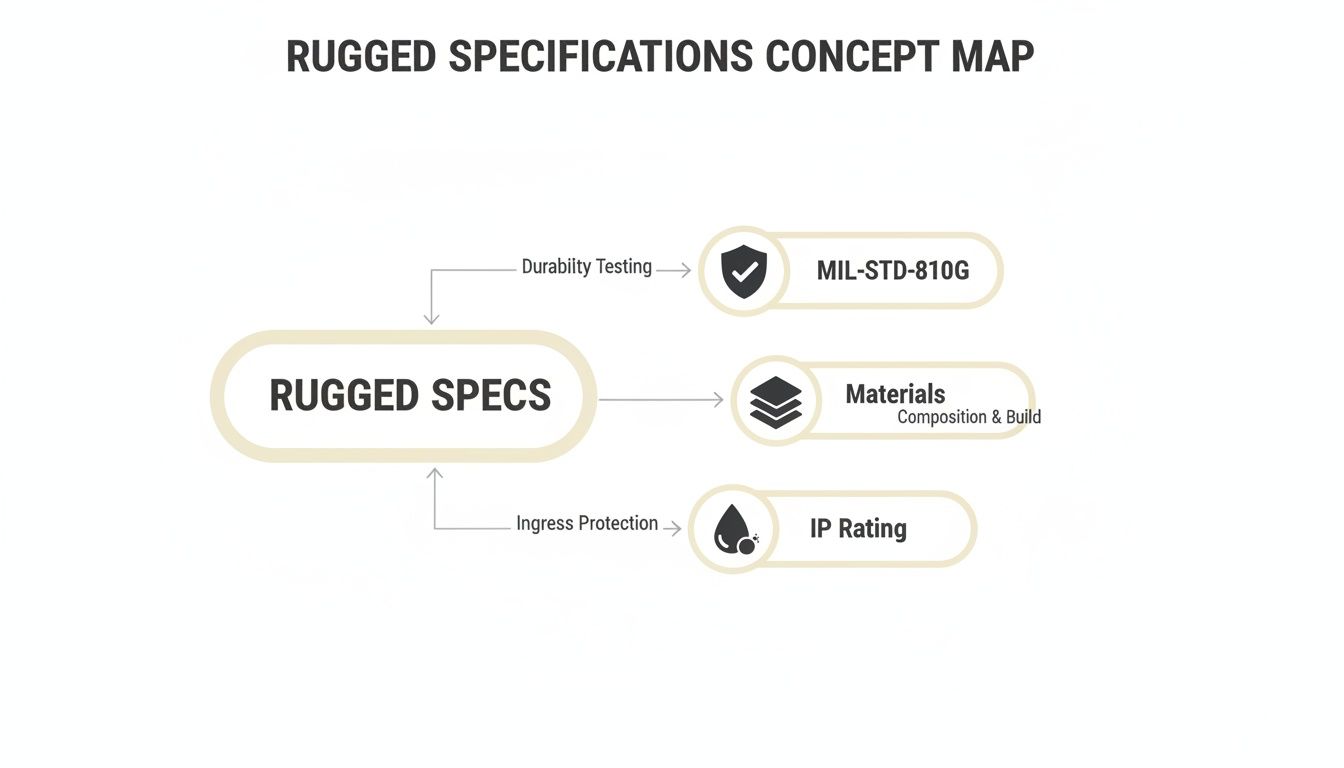
As you can see, military-grade durability, advanced materials, and ingress sealing all have to work in concert to deliver real-world protection. A failure in one area compromises the entire system.
Engineering Solutions for Hinge Security
Case manufacturers have come up with several clever ways to shield the hinge, each with its own pros and cons. Understanding these designs is key to picking the right case for your life, whether you're on a construction site or just navigating a busy city.
The ultimate goal of any hinge protection mechanism is to create a seamless shield that moves in perfect harmony with the phone. It should offer uncompromising defense without interfering with the core functionality of the foldable design.
Common approaches you'll see include:
- Sliding Spine Covers: These spring-loaded designs glide smoothly along the spine as you open and close the phone. They offer fantastic debris protection while keeping a relatively slim profile.
- Articulated Gear Mechanisms: These are more complex systems with interlocking parts that mimic the phone's own hinge. They provide heavy-duty impact resistance and a satisfying mechanical feel, often found on the most protective cases.
- Flexible Strap Covers: Some cases use a tough, flexible material that simply covers the hinge when the device is closed. While less complex, they offer a solid baseline of protection against scratches and minor bumps.
For a deeper look into the engineering and importance of these designs, you can explore why hinge protection is the unsung hero of foldable phone cases.
Comparing Rugged Hinge Protection Mechanisms
To make the choice clearer, here's a breakdown of how these different hinge protection types stack up against each other. Each design excels in different situations, so matching the mechanism to your daily routine is crucial for getting the protection you actually need.
| Hinge Type | Protection Level | Best Use Case | Potential Trade-off |
|---|---|---|---|
| Sliding Spine Cover | High | Everyday carry, dusty environments | Can add slight bulk; moving parts require quality manufacturing |
| Articulated Gear Mechanism | Maximum | Construction, fieldwork, extreme sports | Often found on heavier, bulkier cases |
| Flexible Strap Cover | Medium | Office use, scratch & scuff prevention | Less effective against heavy impacts or fine debris |
Ultimately, the best choice balances your need for maximum protection with your tolerance for added size and weight. A sliding cover is a great all-arounder, while an articulated gear system is for those who can't afford any compromises.
Real-World Scenarios Where Hinge Protection Saves the Day
Let's put this into practice. Imagine you're a field agent on a dusty work site. A case with a sealed, sliding hinge cover prevents airborne particles from getting into the mechanism, ensuring your Galaxy Z Fold 5 opens smoothly day after day. Without it, that fine grit could cause irreversible damage in just a few weeks.
Or, think about a simple accident: your phone gets knocked off a table and lands on its side. An articulated hinge protector can absorb the full force of that sideways impact. This prevents the hinge from being knocked out of alignment—a common and costly repair that isn't covered by a simple screen replacement warranty.
At the end of the day, every other protective feature on a case for a foldable phone relies on the integrity of the hinge. If the hinge fails, the device fails. That’s why prioritizing a case with a well-engineered, robust, and reliable hinge protection system isn't just a recommendation—it's an absolute necessity.
Matching the Right Rugged Case to Your Life
Figuring out the "best" rugged case isn't about finding some mythical, one-size-fits-all product. It's about finding the one that fits your life. The most bomb-proof case on the planet is just a paperweight if it's too bulky to fit in your pocket, and a slim case is nothing but false confidence on a construction site.
Think of it like buying shoes. You wouldn't wear hiking boots to a board meeting or dress shoes to climb a mountain. The trick is to honestly look at your daily grind and match the case's features to your world. That's how you find the perfect balance of protection and practicality for your foldable.
The Construction Pro
Are you on a job site surrounded by dust, debris, and the constant threat of a serious drop? If you’re a Construction Pro, your Galaxy Z Fold or Pixel Fold needs maximum, no-compromises protection. Your biggest enemies are high drops onto hard surfaces and the fine particles—sawdust, concrete dust—that will grind a hinge mechanism to a halt.
For you, a case is a tool for total defense. Here’s what matters:
- Maximum Drop Protection: Don't settle for less than an MIL-STD-810H rating that specifically calls out drops from 10 feet or higher. These cases almost always use a multi-layer design with chunky TPU bumpers and a rigid polycarbonate skeleton.
- Sealed Ports and Hinge: Dust is the silent killer of foldables. A case with tight-fitting port covers and a fully enclosed hinge—like one with an articulated gear or a sliding cover—is absolutely non-negotiable.
- Heavy-Duty Hinge Coverage: An articulated, gear-style hinge protector is your best bet. It provides the toughest possible defense against direct hits that could knock the whole device out of alignment.
For the Construction Pro, bulk isn't a bug; it's a feature. It’s a sign of serious security. A case like the SUPCASE Unicorn Beetle Pro is a perfect example of this philosophy, built for pure durability over sleekness.
The Field Agent
As a Field Agent—maybe you're in logistics, field sales, or surveying—your foldable phone is a critical piece of gear that's constantly in motion. It goes from your vehicle to the client's site and back again. You need a tough case that can handle being used all day and survive the occasional drop, but it also has to play nice with your other accessories. It’s all about balancing protection with practicality.
The Field Agent needs a smart blend of toughness and convenience:
- Balanced Durability: A solid 6- to 8-foot drop rating gives you more than enough protection for daily fumbles without making the phone feel like a brick.
- Wireless Charging and Mount Compatibility: Your case has to work with your car mount and wireless chargers, period. Look for designs that are explicitly Qi-compatible and have a smooth, flat back panel that won't interfere with magnets or charging coils.
- Enhanced Grip: A drop prevented is better than a drop survived. Textured sides and grippy, rubberized materials are key, especially if you're handling your phone with gloves on or just one-handed.
The goal here is confident protection that never gets in the way. A case that nails this balance ensures your phone stays a useful tool, not a fragile liability you have to constantly worry about.
The Urban Adventurer
Navigating a crowded city, hopping on public transit, and juggling a busy social life means your phone is exposed to a thousand little risks every day. As an Urban Adventurer, you want military-grade security for your Galaxy Z Flip or Fold, but you have zero interest in turning your slick, modern phone into something that looks like it belongs on a battlefield. The magic words for you are "slim rugged."
This is all about merging serious protection with smart design:
- Certified Protection, Slim Profile: You'd be surprised how much protection modern cases can pack into a thin frame. Many offer MIL-STD-810G ratings by using clever engineering, like hollowed-out air pockets in the corners, to absorb impacts without adding a ton of mass.
- Responsive Buttons and Precise Cutouts: A great urban case should feel like it's part of the phone. That means tactile, "clicky" button covers and perfectly aligned openings that don't make it a pain to plug in your charger or use your speakers.
- Stylish Design: Rugged doesn't have to mean ugly. Brands like Spigen and OtterBox have entire lines that deliver rock-solid protection in a whole range of colors and finishes that actually complement your phone's design instead of hiding it.
This need for smarter, tougher cases is driving huge growth. The global rugged phones market, which relies on this exact kind of protection, is expected to explode from USD 3.485 billion to USD 8.97 billion by 2034. With over 60% of that demand coming from industrial sectors like construction and manufacturing—where device failure rates can plummet by up to 70% with the right case—the value of specialized protection is crystal clear. You can discover more insights about the rugged phone market on businessresearchinsights.com to see the full trend.
By figuring out which of these personas sounds most like you, you can cut through the noise and find the perfect rugged case for your foldable.
Building a Complete Protection System for Your Foldable
Picking a great rugged case for your Galaxy Z Fold or Pixel Fold is a huge first step. But true peace of mind doesn't come from just one product—it comes from building a complete protective ecosystem. Your case is the foundation, sure, but the accessories are the walls and roof that finish the job.
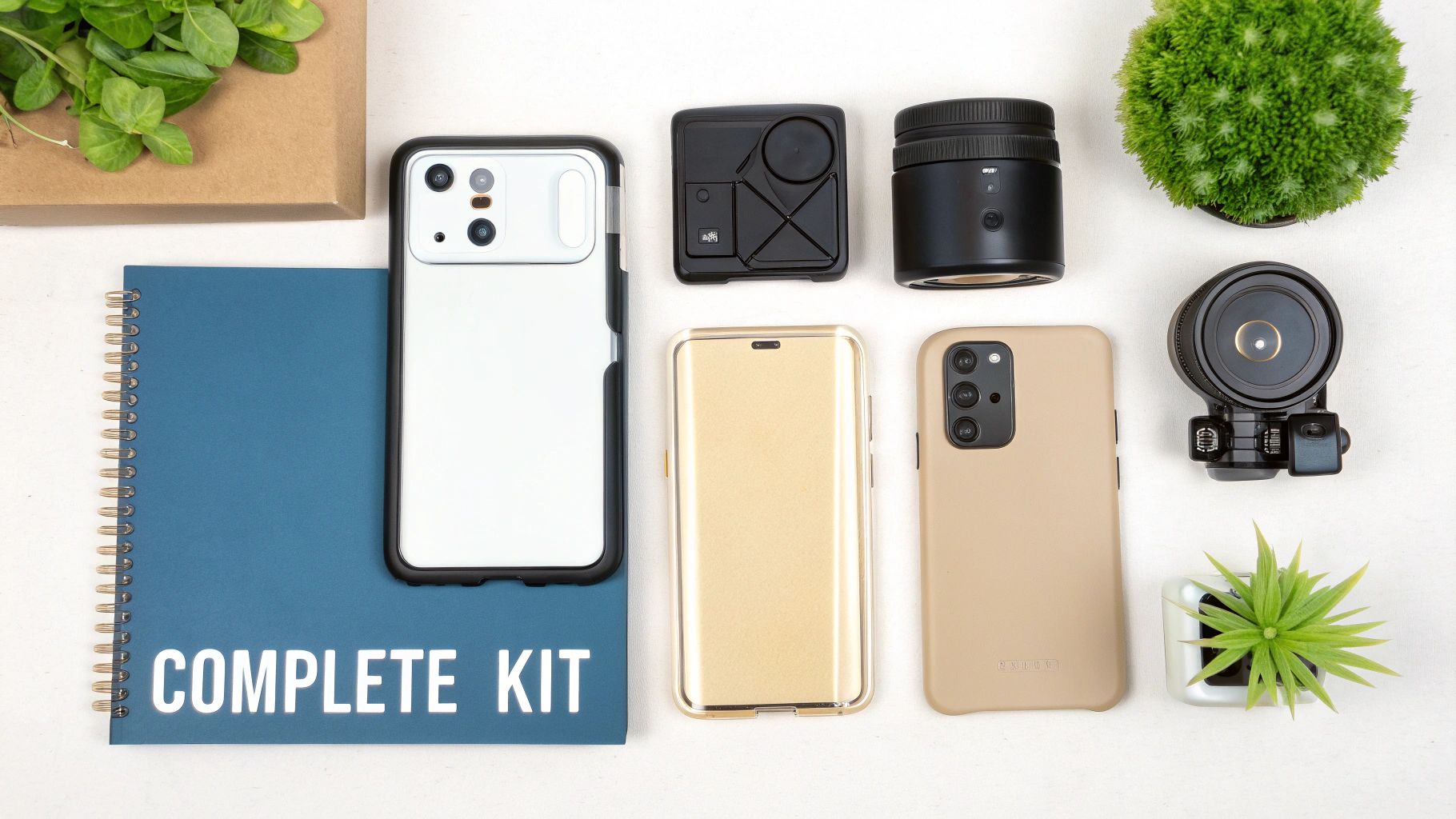
This system-based approach is why the mobile case market is booming, set to grow from USD 24.99 billion in 2024 to an incredible USD 41.45 billion by 2032. With foldable phone shipments expected to cross 50 million units globally by 2028, the need for a full suite of accessories is only going to grow. Professionals in the field already know what’s up: 65% say certified drop protection is their top priority, and 55% demand magnetic compatibility for their gear. You can read the full research on the mobile case market on verifiedmarketresearch.com to see how the industry is evolving.
The Non-Negotiable Screen Protector
Even the best case with deep, raised bezels can't protect your foldable's screens from everything. The massive, delicate inner display is especially vulnerable. A quality screen protector isn't an optional add-on; it's a mandatory layer of defense.
For foldables, this is a two-part strategy:
- Tempered Glass (for the outer screen): This rigid shield provides top-tier scratch resistance and impact absorption for the cover display, which takes the brunt of daily abuse.
- Flexible Film (for the inner screen): A soft, often self-healing film is essential for the main folding display. It’s designed to flex right along with the phone while protecting the ultra-thin glass from nicks and scuffs caused by trapped dust or debris.
Protecting Your Phone's Eyes
Just like you shield the screens, you have to protect that powerful camera array. Your foldable’s camera system is an intricate piece of tech with precision lenses that are incredibly easy to scratch or crack, especially when you're out in the field.
A dedicated camera lens protector, usually made of tempered glass, acts as a sacrificial barrier. It takes the hit from keys, gravel, or tools that could permanently wreck your camera's performance, ensuring your photos and videos stay sharp and clear.
A complete protection system recognizes that a phone's weak spots go beyond just its body. The screens and camera lenses are critical, expensive components that need their own dedicated armor for true 360-degree security.
Functional Gear for the Field
Real-world rugged utility is about more than just surviving a fall. Your protective ecosystem should make your foldable phone better to use in tough situations. For anyone working a long day away from a power outlet, a reliable power source and a secure mount are absolutely essential.
Think about adding these to your kit:
- Fast-Charging Power Bank: A high-capacity, durable power bank keeps your device running through long shifts or multi-day trips. It’s the lifeline that keeps you connected when it matters most.
- Secure Car Mount: Your average car mount probably can't handle the weight and odd shape of a cased foldable. You need a heavy-duty mount with strong clamps or magnets specifically built to hold bigger, heavier devices steady on bumpy roads.
By pairing a top-tier rugged case with these key accessories, you’re not just protecting your foldable from damage. You're building a comprehensive system that turns it into a more reliable and effective tool for any environment.
Your Rugged Case Questions Answered
Choosing the right case is a big decision, especially when you’re protecting a premium foldable device. It’s only natural to have a few final questions before you commit. Let's clear up the most common concerns so you can feel 100% confident in your choice.
Will a Rugged Case Make My Foldable Phone Feel Too Bulky?
Not like they used to. Modern rugged cases are smarter, using advanced materials like polycarbonate and TPU to deliver serious protection without turning your phone into a brick. Think of it as the difference between old-school body armor and modern Kevlar—both stop bullets, but one is way more efficient.
Many of our best designs now hit that "slim rugged" sweet spot. You get certified drop protection that still slides into your pocket and works perfectly with wireless charging. The real key is matching the level of bulk to your actual, day-to-day life.
Can I Still Use Wireless Charging and NFC Payments?
Absolutely. Any high-quality rugged case for a foldable is engineered to be fully compatible with today's tech. Case designers are meticulous about selecting materials and thicknesses that don’t interfere with Qi wireless charging coils or the NFC antennas needed for Google Pay.
Just be a little wary of cases with large metal plates or kickstands positioned directly over the charging coil, as those can sometimes cause problems. To be safe, always double-check the product specs for confirmed compatibility before you buy.
A MIL-STD drop rating is a great indicator of drop survivability, but it’s only part of the story for a foldable. Hinge protection is equally, if not more, important for these unique devices.
How Do I Clean a Rugged Case Without Damaging It?
Keeping your case clean is crucial, especially if you work in dusty or grimy environments. The best way is simple: take your phone out, then wash the case with warm water and a bit of mild dish soap. An old toothbrush works wonders for getting into the crevices and around port covers.
The most important step? Make sure the case is 100% dry before you snap your phone back in. Trapping moisture is a big no-no. For the hinge mechanism itself, a quick blast from a can of compressed air is the perfect way to clear out dust and keep the folding action silky smooth.
Is the MIL-STD Drop Rating the Only Important Feature?
While a MIL-STD rating is a fantastic benchmark for surviving a fall, it's just one piece of the puzzle for a foldable phone. A case could technically survive a 10-foot drop, but if it has zero hinge protection, it has completely failed to protect your device's most critical moving part.
Always look for a complete protection system: a solid drop rating, robust hinge coverage, raised bezels (lips) around the screens to prevent scratches, and tactile button covers. A truly great rugged case isn't just strong; it's thoughtfully designed to handle all the unique challenges a foldable phone presents.
At FoldifyCase, we build cases that deliver this complete system of protection without compromise. Our designs are engineered from the ground up for devices like the Samsung Galaxy Z Fold and Google Pixel Fold, offering certified durability and unbeatable hinge security. Explore our collection to find the perfect rugged case for your foldable device at https://www.foldifycase.com.
Article created using Outrank